Case Study

Transforming Vendor Management

In 2024, my team set out to increase the number of invitations to AppFolio's vendor portal. While the business goal was to drive Vendor Pay conversions, our research uncovered a significant underlying user problem: for property managers, the process of collecting and managing vendor compliance documents was a major point of friction. Solving that problem with a completely new feature led to a 6x increase in vendor portal invitations.

Type

Company

Tools

New feature in B2B SaaS portal
AppFolio
Figma,

The Crux: Manual Effort and Legal Risk

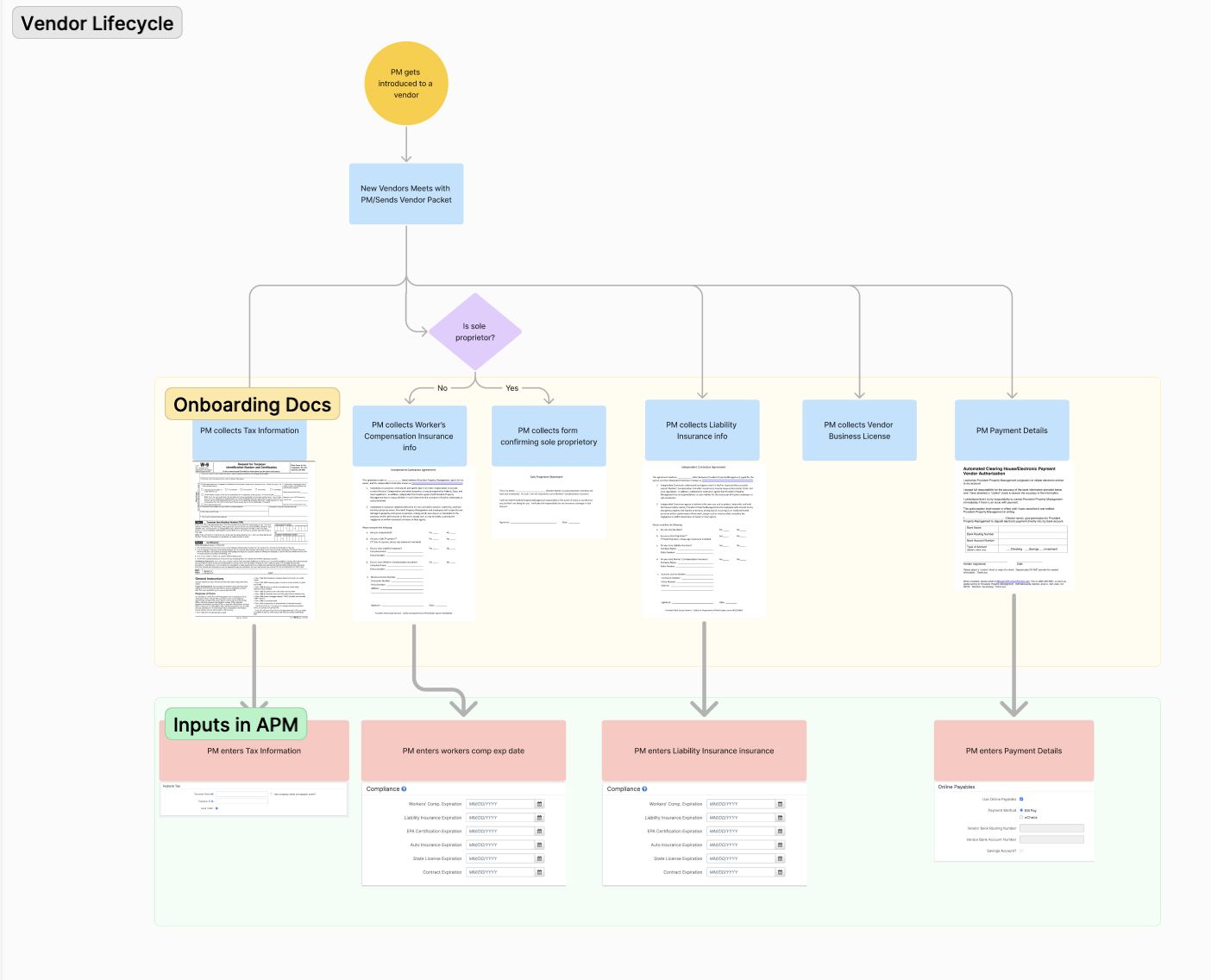
Through direct customer conversations and surveys, we identified a critical pain point for property managers. The existing process for collecting documents, including W-9s and insurance certificates, was entirely manual. Property managers had to email vendors, track down responses, and manually update expiration dates in the software.

This revealed two primary concerns for our users:

1) High manual effort: The constant need to hunt down documents was described as "a job in itself!"

2) Significant legal risk: Failing to maintain up-to-date documents exposed property management companies to risk and could delay payments to their vendors.

Using Research Insights to Drive our Product Strategy

Our research further clarified key opportunities in the user journey where we could intervene:

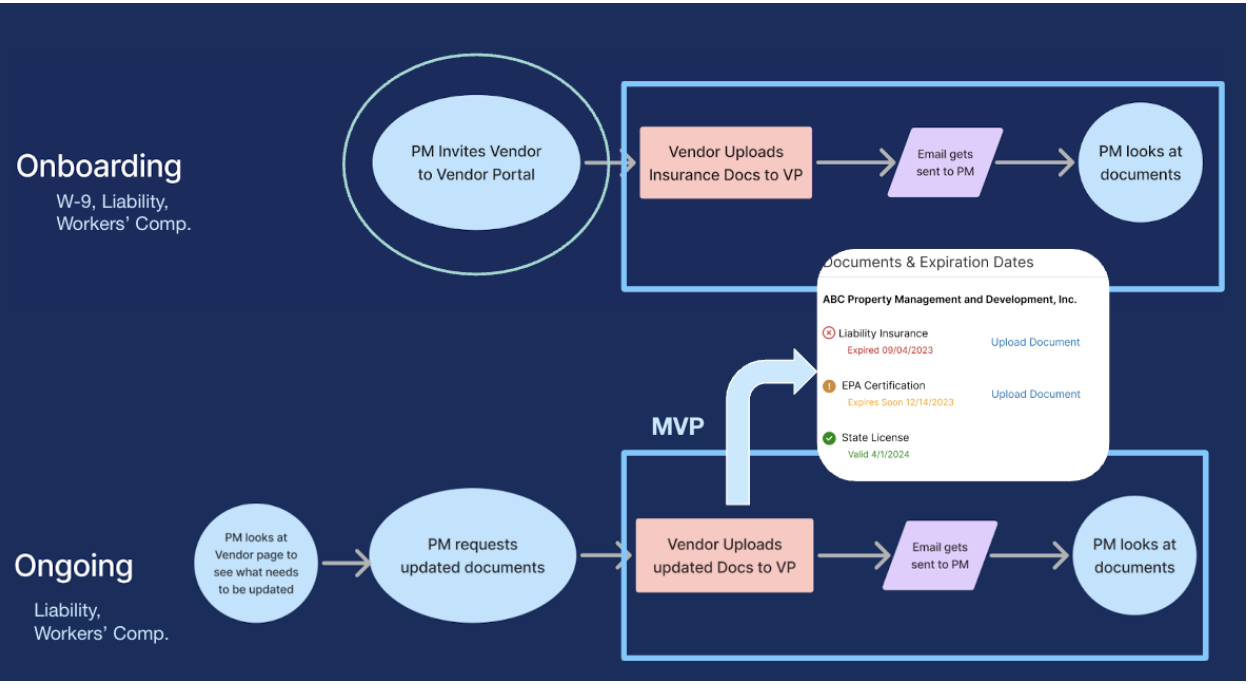
1) New vendor onboarding: When property managers first enter a new vendor, they must request initial documents, such as a W-9 and proof of insurance.

2) Ongoing compliance: Property managers must continuously request updated documents from existing vendors as they expire.

Sometimes there are simple solutions to complex problems.

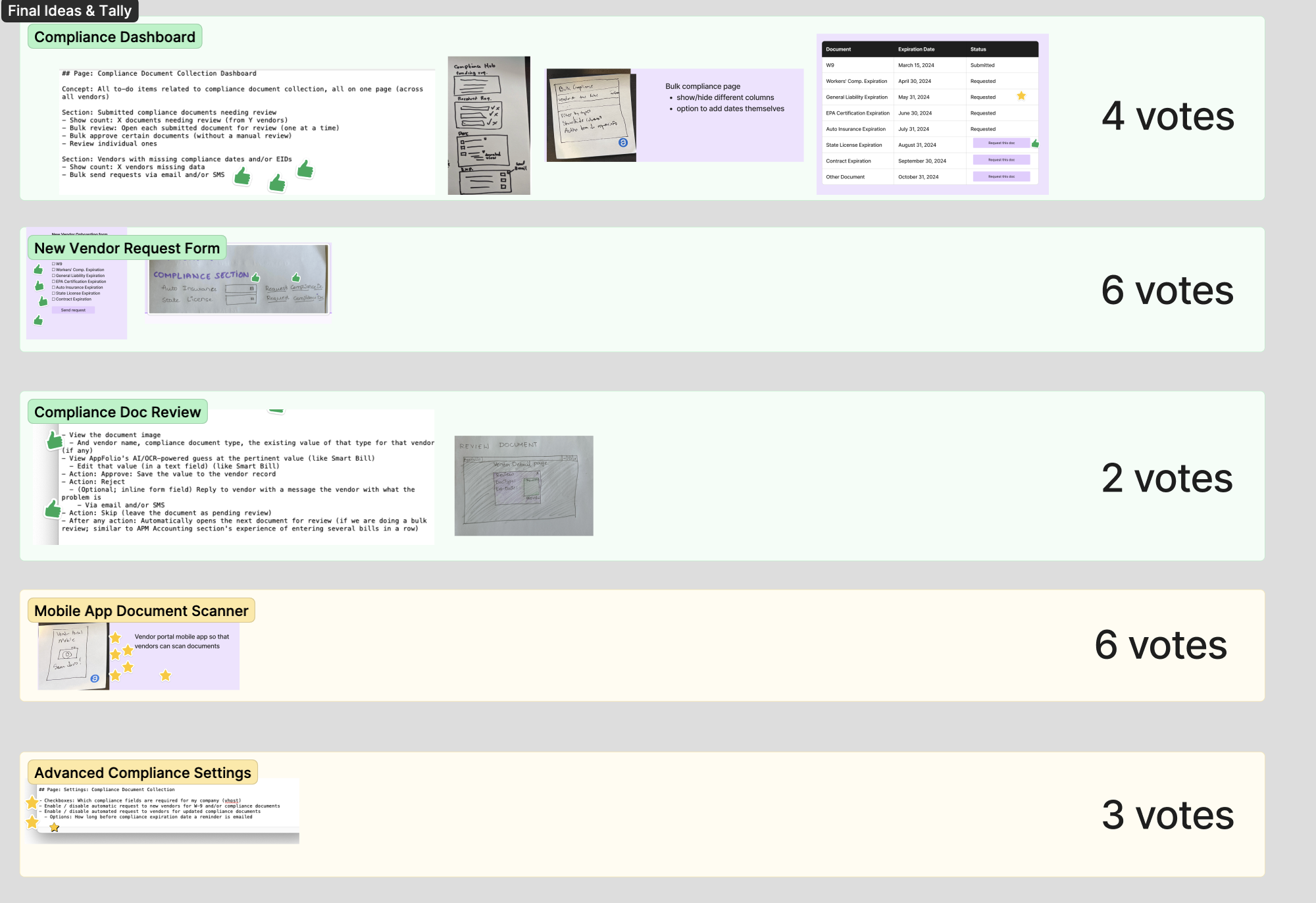
To align us on a path forward, I pulled together a cross-functional team for a design sprint. The collaborative session I led produced two immediate focus areas: allow property managers to request documents via a new vendor form and create a dashboard to track expired documents. After a debate over building a new feature and technical constraints, we agreed to go for it and to focus first on enabling document upload in the portal.

A Multi-faceted and Iterative Design Process

Our process was grounded in early validation, cross-functional collaboration, and continuous user feedback.
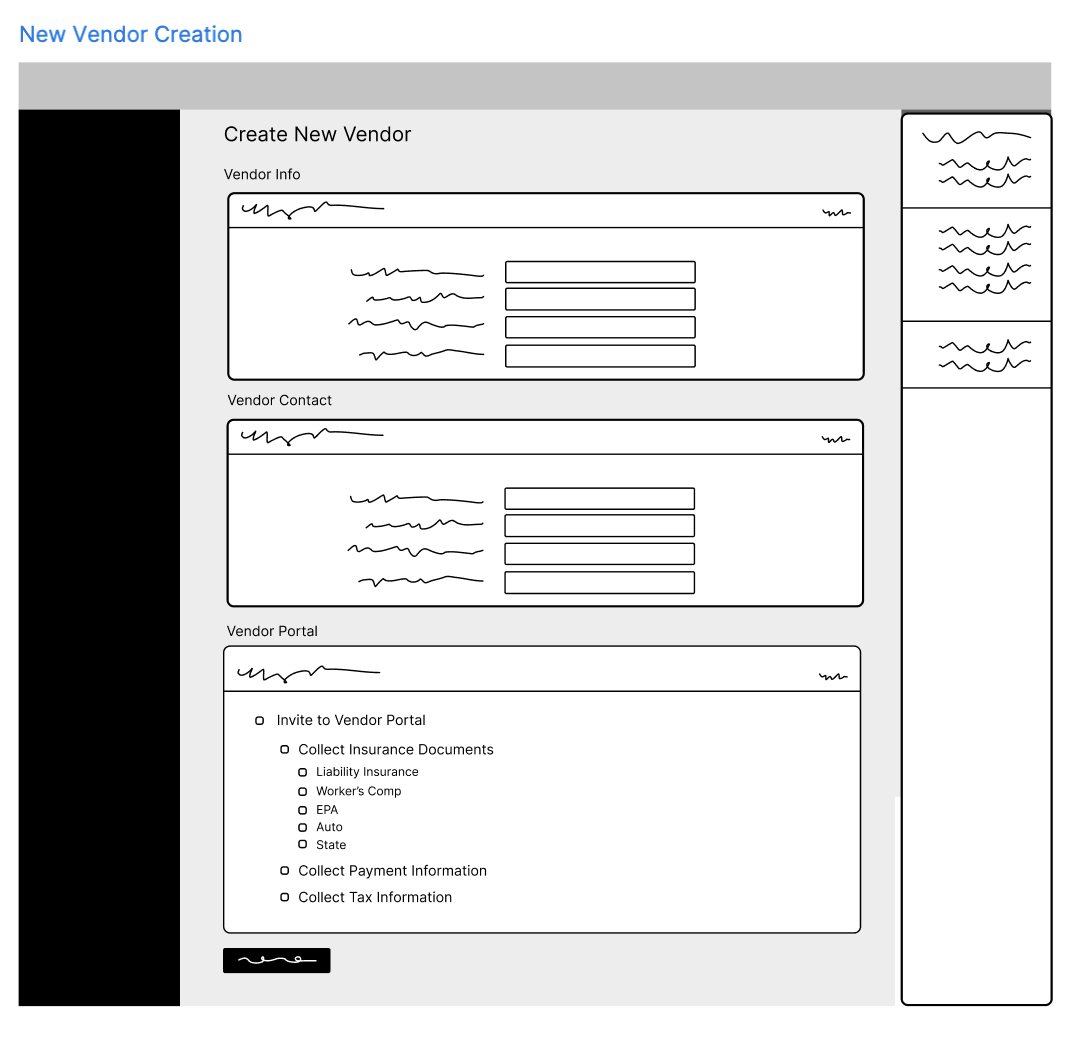
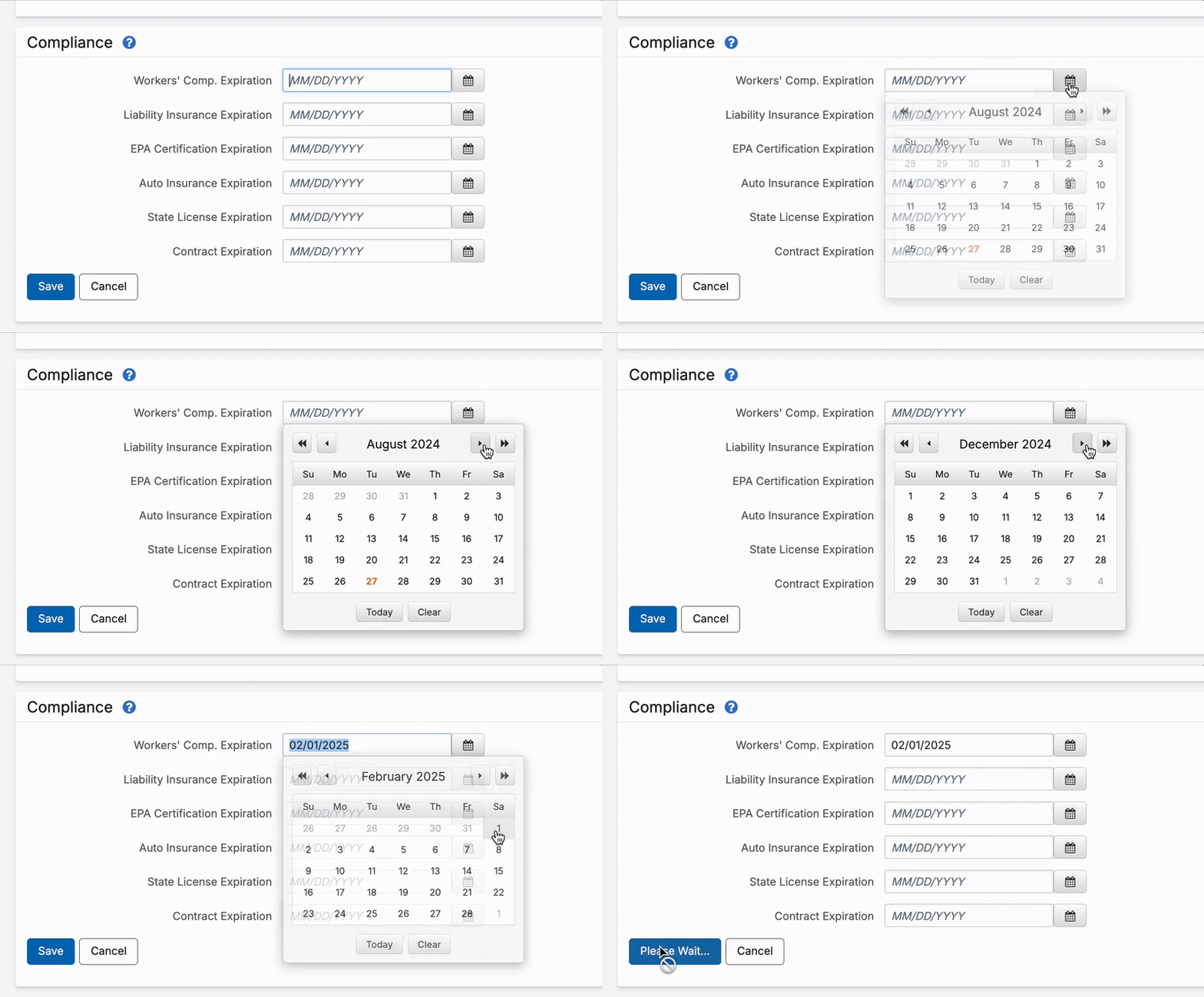
Lo-Fi validation: I began by testing low-fidelity concepts with customers to validate our core ideas for a centralized view of expired documents and a new vendor request flow.

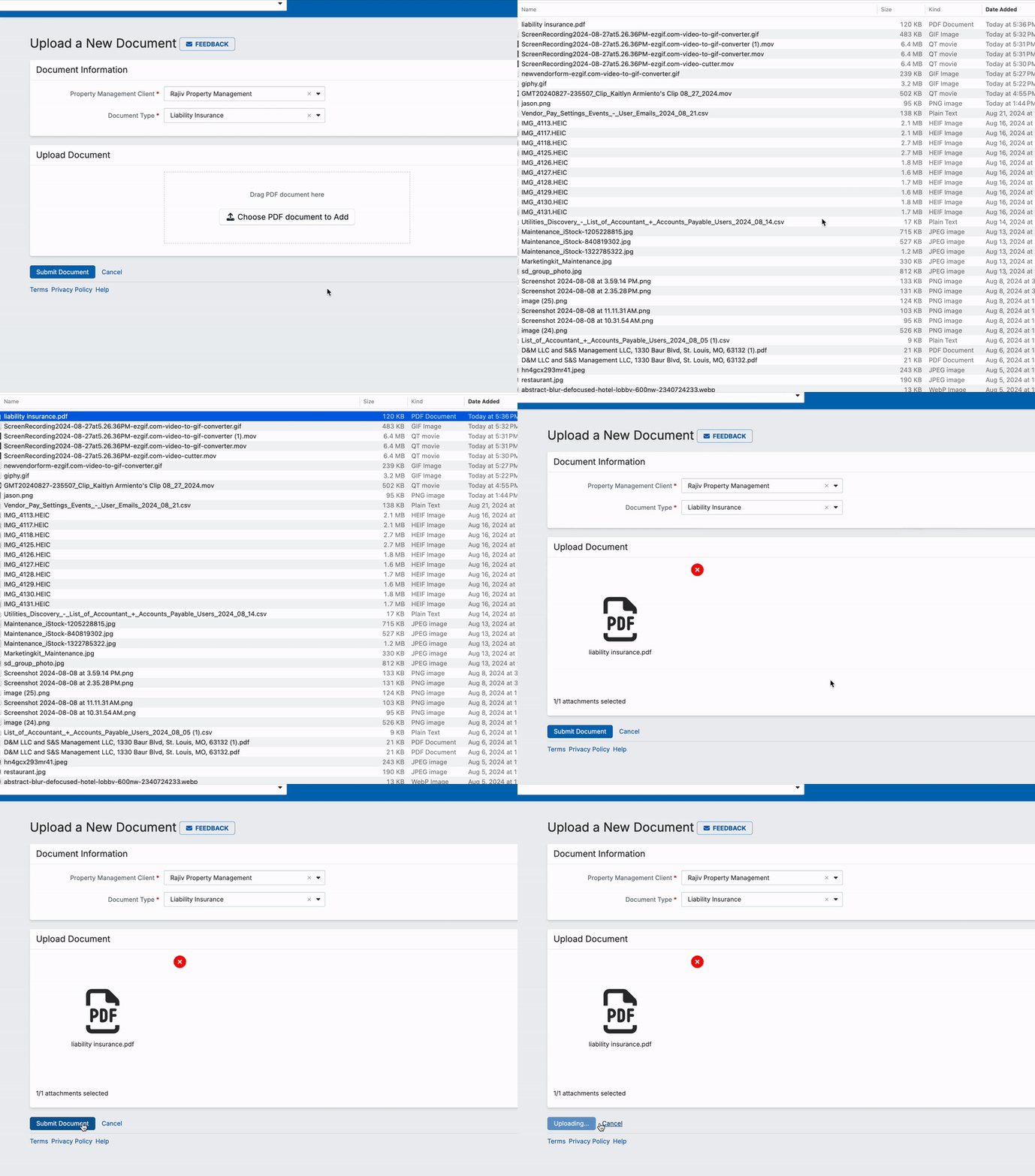
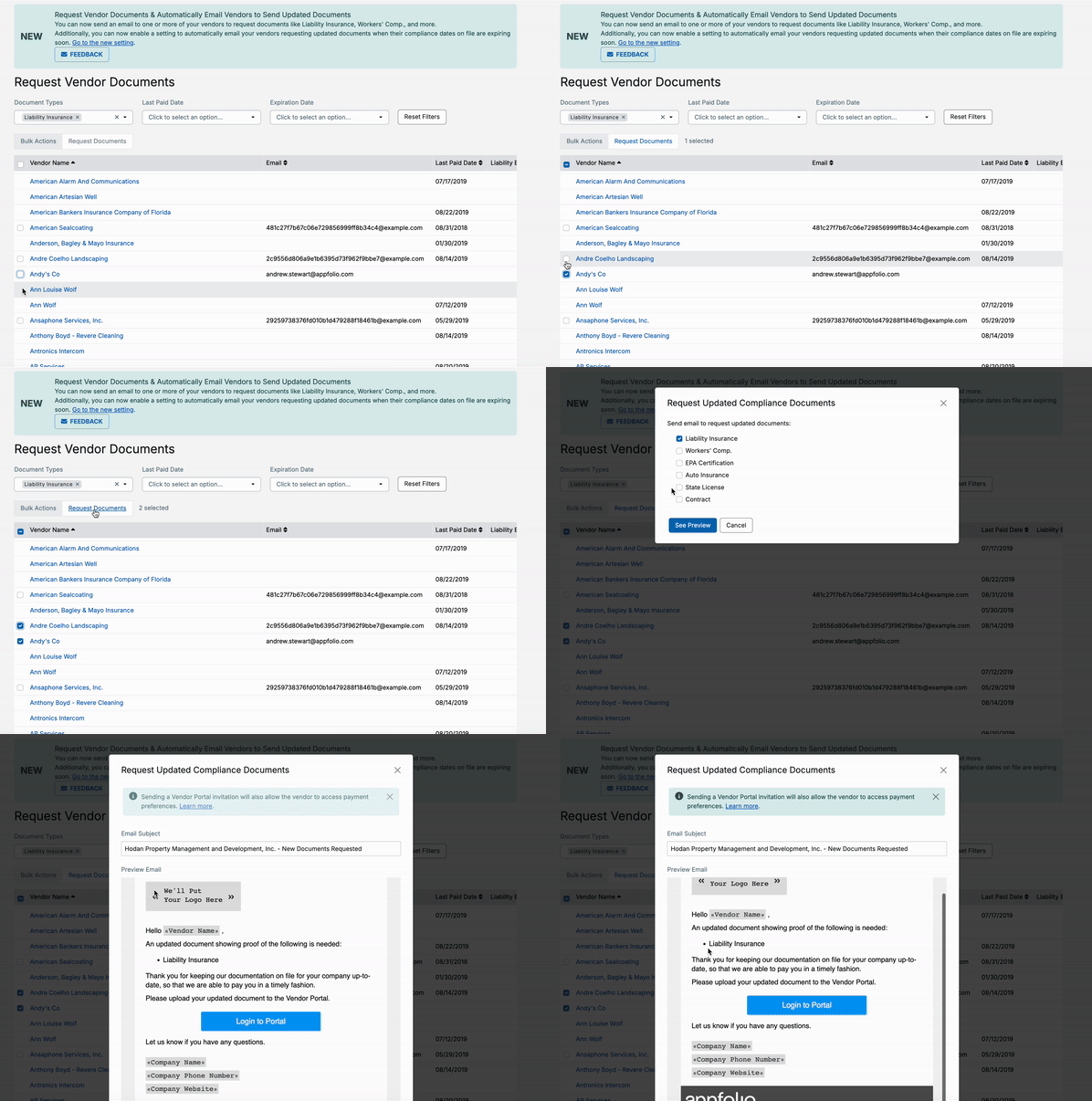
Phased rollout: Our first iteration enabled vendors to upload documents directly in the portal. We built on this by adding the ability for property managers to request documents from new vendors directly from the new vendor form. This specific addition led to a huge jump in portal invitations and revenue. Subsequently, we added request buttons for existing vendors with expiring documents.
Mixed-methods beta testing: We launched to a beta group to collect feedback through multiple channels. I sent a targeted survey to the beta group for vendor-specific feedback, while we used in-app feedback forms and Mixpanel data to identify where vendors were getting stuck or dropping off.

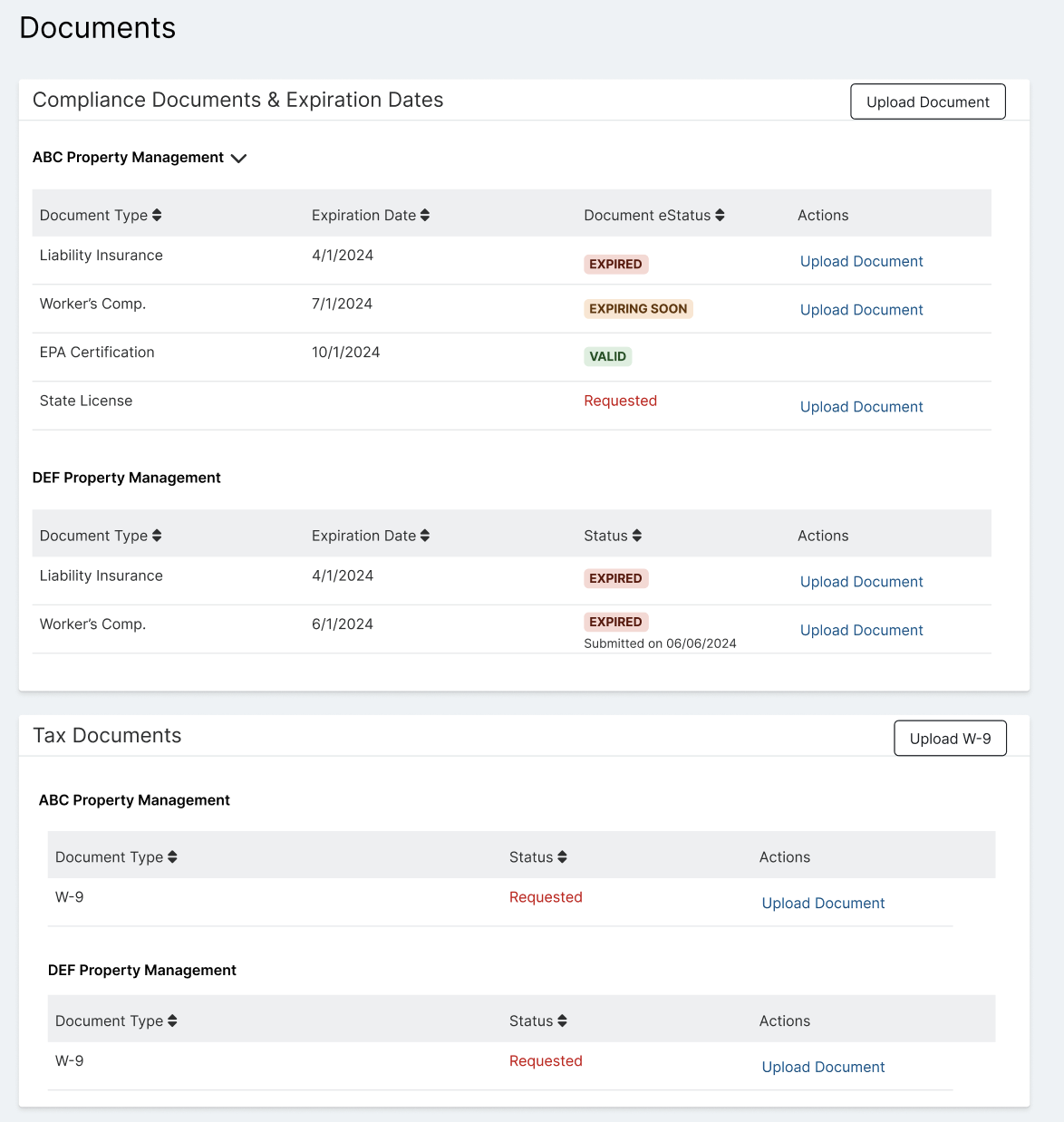
"Walking the Store": I led an exercise where our entire team walked through the flows to identify user experience "paper cuts." This collaborative audit resulted in a prioritized backlog of JIRA tickets to improve the experience for both vendors and property managers. One key outcome was moving the upload feature from a settings page to a new, dedicated documents page that clearly displayed document status and expiration dates for all their clients.
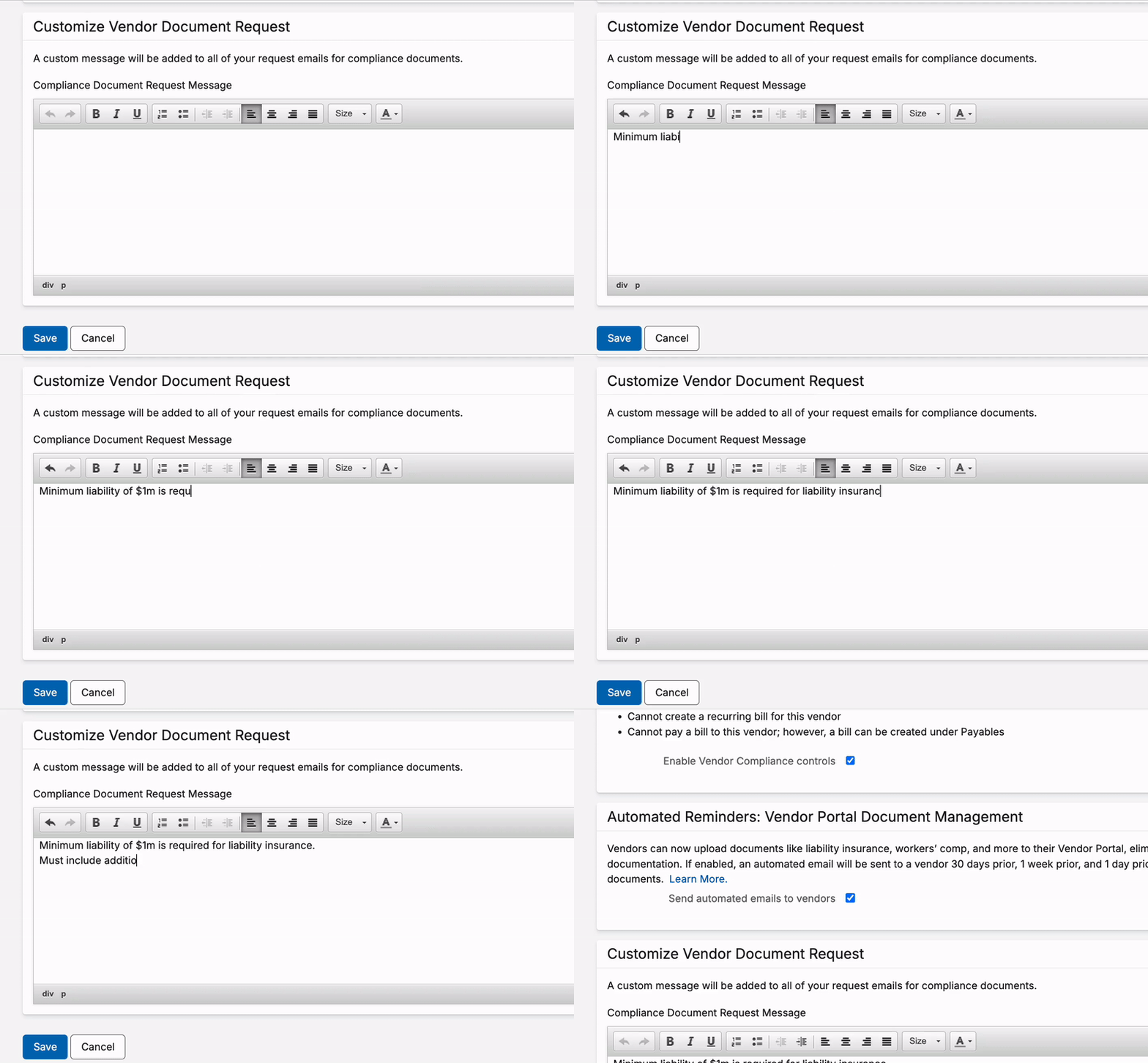
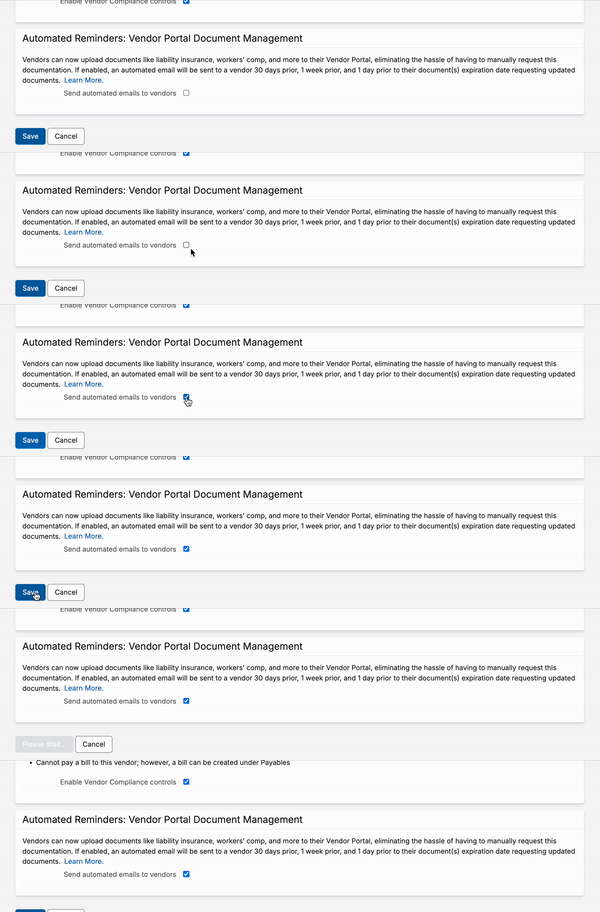
Data-driven prioritization: I conducted gut check calls with customers to validate our MVP for a bulk request page. During these calls, I also gauged interest in potential enhancements, which helped the team prioritize what to build next: a vendor document dashboard, email customization, and automated reminders. This led directly to features allowing property managers to customize request emails and automate reminders for expiring documents.

AI integration: As part of the feature expansion, we were among the first teams to integrate vendor request actions into the software's AI component, enabling users to initiate requests via prompts. Based on this, I was enthusiastic about identifying more opportunities to improve and streamline our flows with our AI.
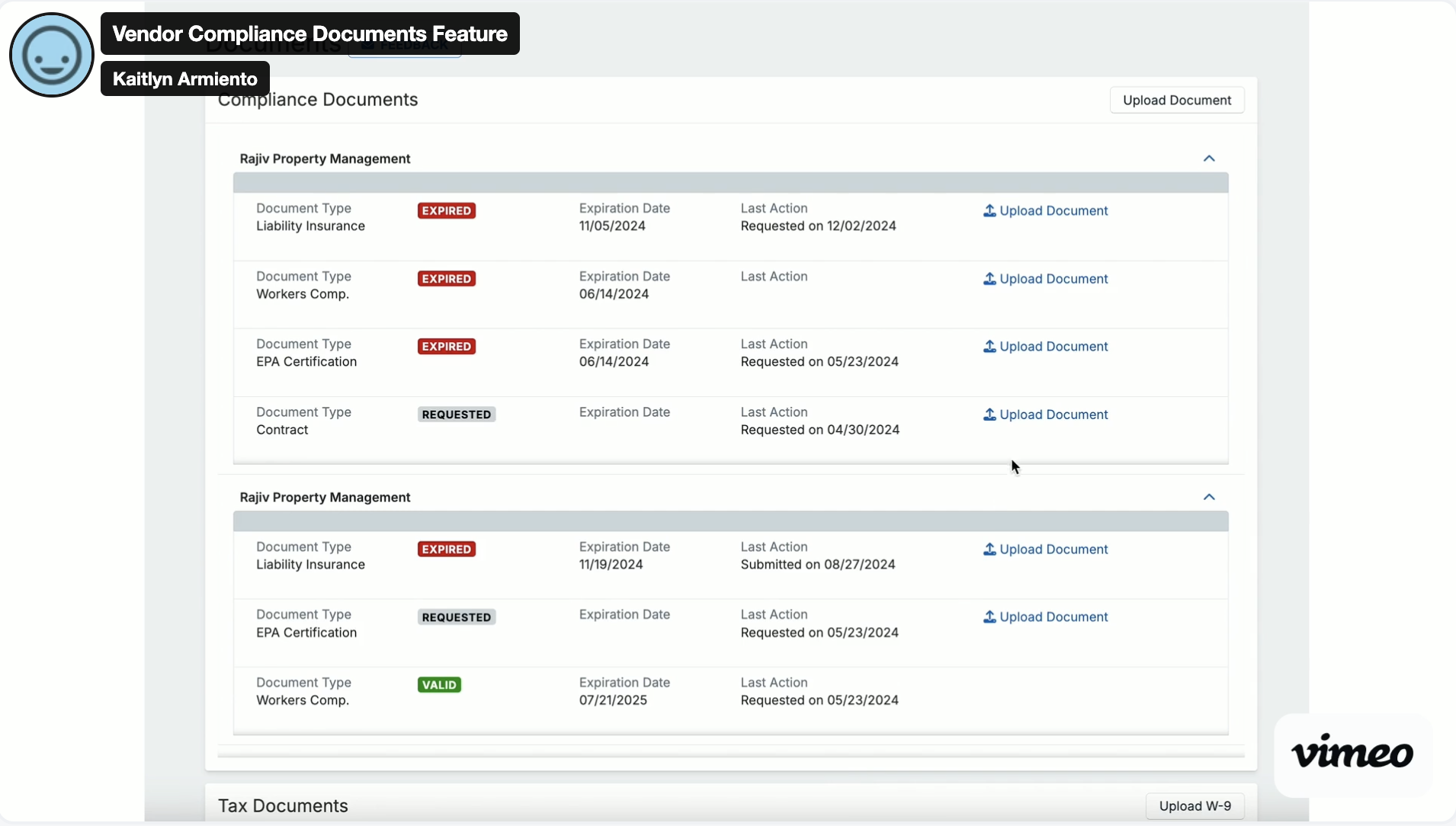
Click on video to view prototype.

Exceeding Expectations with Measurable Impact

Our solution drove significant business results and user adoption, well beyond our single-target metric. Some key results of this feature:

Sent 6x more vendor portal invites
Over 150,000 compliance documents were submitted through the portal
Added 75,000 new vendor-portal users solely from this feature
Generated 13,000 Vendor Pay submissions from these new users

Wins All Around

This project reinforced the value of a deeply collaborative and user-centered design process. By introducing the "Walking the Store" exercise, I proved that involving the entire product team in the UX audit is invaluable for identifying and prioritizing usability improvements aligned with key metrics. Furthermore, by continuously gathering qualitative feedback through customer calls, we were able to confidently prioritize our roadmap and deliver high-value enhancements, such as automation and customization, that directly addressed user requests.

More Case Studies